Worried about forgetting something important before you fly abroad? Your international travel packing list should start with documents, medicines, and batteries, then add light, mix-and-match clothing. Get the carry-on rules right and the rest is easy.
Browse more travel tips if you want a wider planning toolkit for your trip.
| Packing rule | Value |
|---|---|
| Lithium batteries allowed on passenger aircraft | 0-100 Wh |
| Batteries that need air carrier approval | 101-160 Wh |
| Batteries that are forbidden | Exceeding 160 Wh |
| Spare lithium batteries and power banks in checked bags | Never allowed |
| AskTSA live assistance hours | 8 am – 6 pm (ET) |
| AskTSA availability | 365 days a year |
These figures come from the FAA’s PackSafe resources for passengers and the TSA’s What Can I Bring? page. Rules and hours can change, so check the source before you rely on them.
Start with the items you cannot replace abroad
The best packing strategy is to sort your belongings by how hard they are to replace. A shirt can be bought in any city, but a passport cannot. If you have not applied yet, read our guide on how to get a passport before you book anything non-refundable.
Keep these items in a bag that stays with you for the whole journey:
- Your passport, plus any visa or entry paperwork your destination asks for
- Payment cards and a small amount of local cash
- Prescription medicines in their original packaging
- Travel insurance details and emergency contacts
- Phone, charger, and any spare power bank
- Printed or offline copies of your bookings
A photo of each document stored offline is a cheap backup if something goes missing. If you are still shaping the bigger picture of your trip, our walkthrough on how to plan a vacation helps you settle dates and budget first.
What belongs in your carry-on
Your carry-on is the bag you cannot afford to lose, so it should hold the essentials rather than whatever fits. The TSA says that planning ahead and packing properly can facilitate the screening process and ease your travel experience at the airport.
The FAA also advises that cell phones, laptops, spare rechargeable batteries, wireless headphones, portable gaming devices, and tablets are safest in your carry-on bag. That keeps your valuables close and keeps battery risks where the crew can respond.
If you travel with a baby, the TSA lists that baby food is allowed in reasonable quantities in carry-on bags. Medicines, toiletries, and assistive devices are also exceptions to the general ban on dangerous goods, as the FAA explains on its PackSafe page.
Lithium batteries and power banks: the rule that trips people up
Almost every modern trip involves a power bank, and that is where many travellers go wrong. The FAA’s guidance on traveling with lithium batteries says batteries 0-100 Wh are allowed on passenger aircraft, 101-160 Wh require an air carrier’s approval, and batteries exceeding 160 Wh are forbidden.
The watt-hour rating is printed on most batteries, so check it before you leave home. Here is a simple routine:
- Find the Wh rating on each spare battery or power bank.
- Sort anything near the upper limit and ask your airline before you reach the airport.
- Leave oversized batteries at home.
- Move every spare battery into your carry-on before you head to the airport.
On that last point, the FAA’s packing blog is blunt: spare lithium batteries, including power banks, must never be in checked bags.
Clothing and toiletries: pack light and mix and match
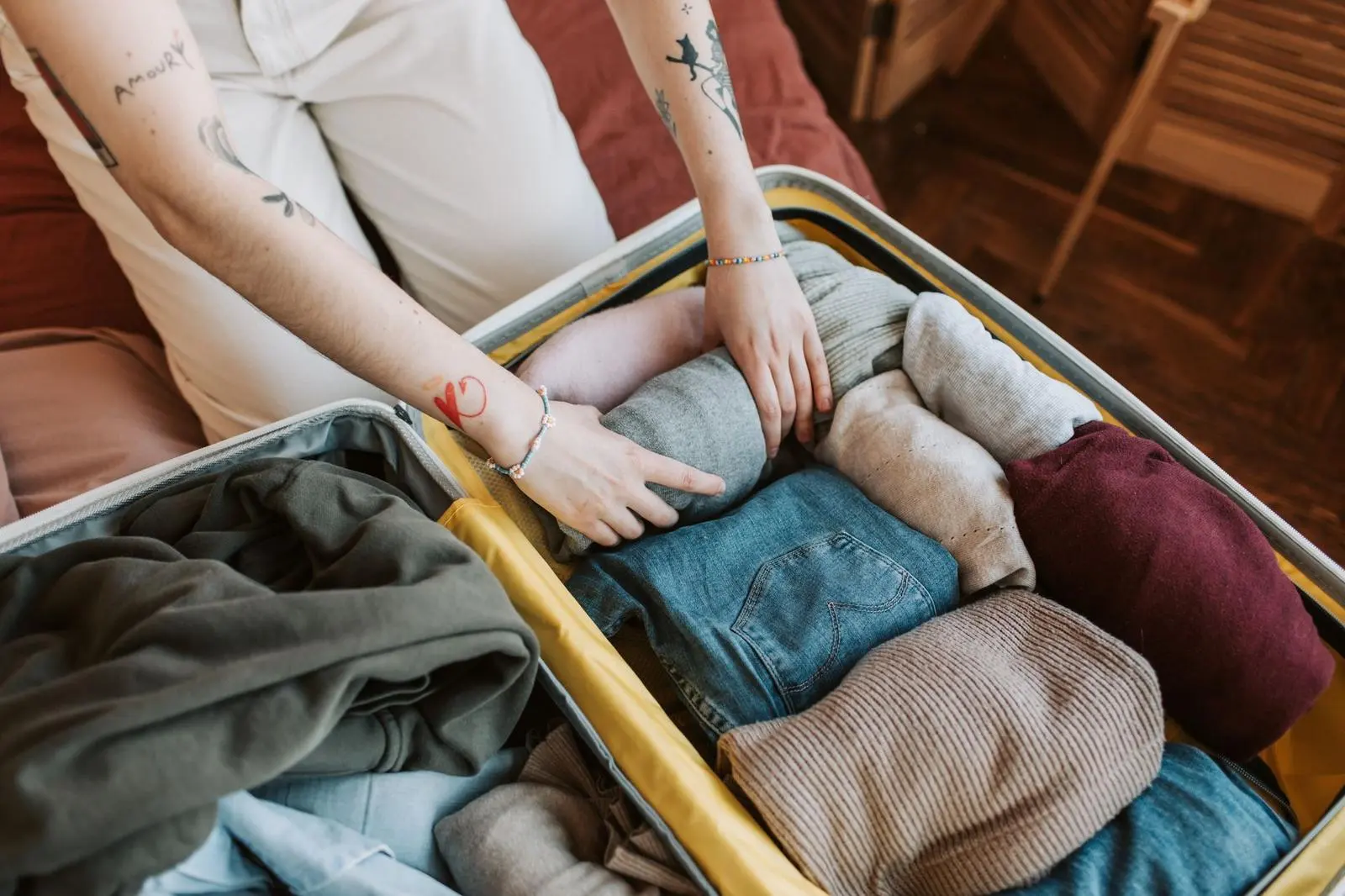
Clothes are the easiest category to overpack. Choose a small palette of colours so every top works with every bottom, and favour fabrics that dry quickly in a hotel sink. Layers beat bulky single items because they adapt to cold planes and warm afternoons alike.
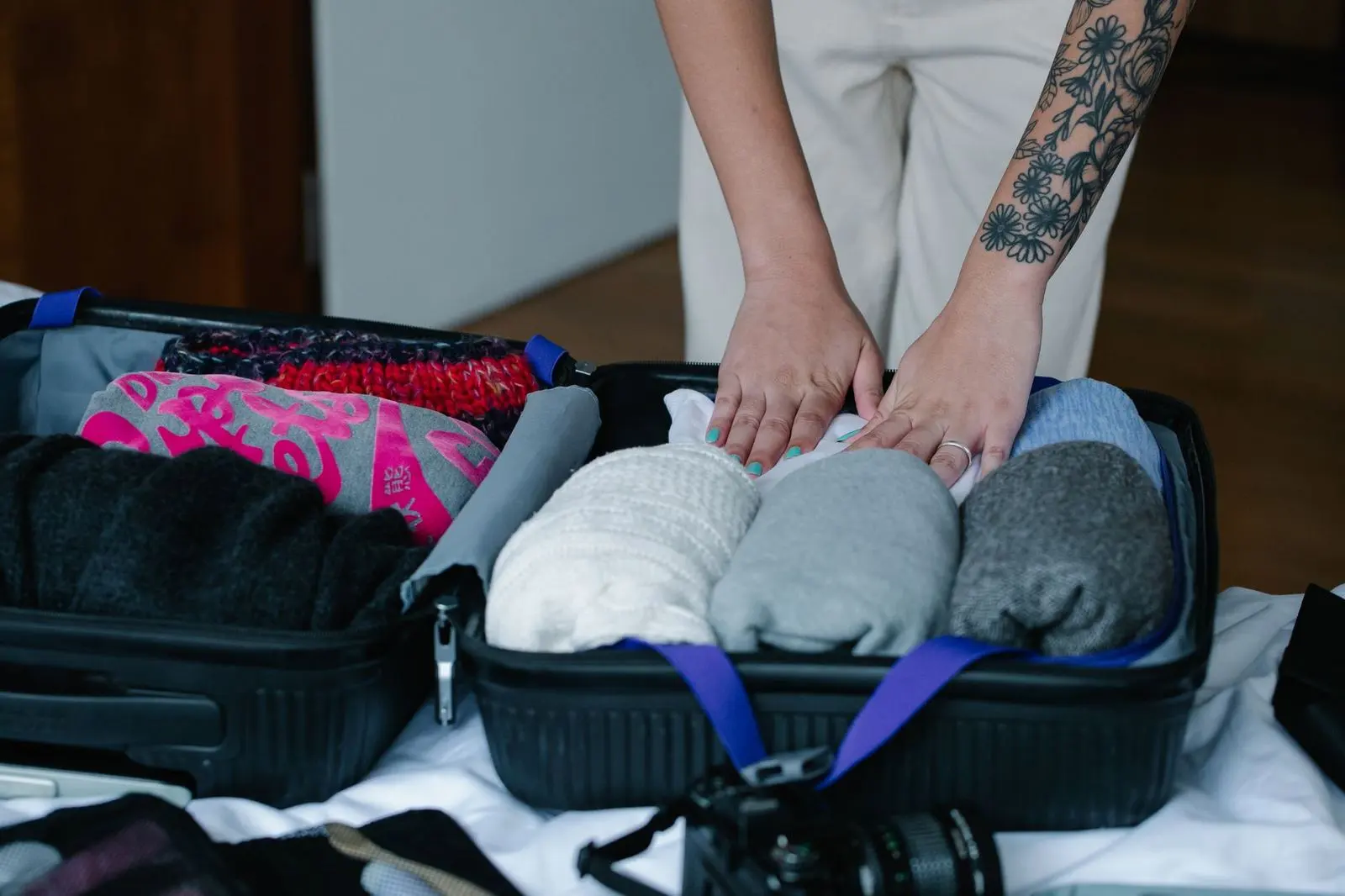
A workable clothing list looks like this:
- A few tops that can be layered
- Two bottoms in neutral colours
- One light jacket or rain layer
- Comfortable walking shoes you have already broken in
- Sleepwear and enough underwear to last between laundry stops
- One smarter outfit for a nice dinner or a place of worship
For toiletries, decant what you need into small containers and buy bulky items at your destination. Your destination’s climate and customs should shape the final choice, so read up on local dress norms before you commit.
Should you check a bag?
A carry-on-only trip is faster and avoids lost luggage, but it is not right for every itinerary. Long stays, cold-weather gear, and sports equipment often justify a checked bag. Check your airline’s own baggage allowance before you decide, because limits differ between carriers.
If you do check a bag, put clothing and low-value items in it and keep everything you cannot replace in the cabin. The FAA is clear that most dangerous goods are forbidden in carry-on and checked baggage, so a checked bag is not a place to hide questionable items. Its advice for anything unclear is short: when in doubt, leave it out.
Frequently asked questions
What if the item I want to bring is not on the TSA list?
Show answer
You can contact the AskTSA team, which answers questions by social media, chat, and text message. According to the TSA’s What Can I Bring? page, it is available 365 days a year, with live help from 8 am – 6 pm (ET).
Can an allowed item still be stopped at security?
Show answer
Yes. The TSA notes on its What Can I Bring? list that a generally permitted item may face extra screening, or be refused, if it triggers an alarm, looks tampered with, or raises other security concerns.
Are TSA and FAA packing rules the same thing?
Show answer
No. They sometimes overlap, but the FAA’s PackSafe guidance explains that TSA security rules on prohibited items are separate from FAA dangerous goods safety rules. Check both when you pack.
What should I do with a battery bigger than a typical power bank?
Show answer
Look at its watt-hour label. Under the FAA’s battery guidance, a mid-range unit rated 101-160 Wh needs your airline’s go-ahead, and a larger one is not permitted on the aircraft at all.